DHARMA PATHFINDER
If You Meet the Buddha on the Road…
By Aspi Mistry
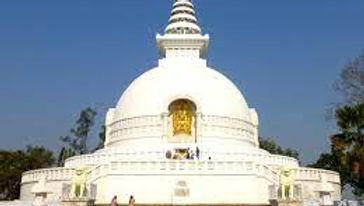
The 9th century Zen Master Lin Chi is supposed to have said, “If you meet the Buddha on the road, kill him.” Of course, Lin Chi may have never had an opportunity to follow his own advice. The one who did meet the Buddha immediately after his Enlightenment was Upaka the ascetic. The Buddha said to him, “I am conqueror of all, knower of all, freed from taints in all things ….” Upaka replied, “Perhaps, friend …” and walked off, shaking his head. [1]
Angulimala met the Buddha on the Road and cried, “Stop!” But it was he who had to stop. His career of killings had ended.
Ashoka the Emperor encountered him, gazing upon the killing fields of Kalinga, and became a Wheel-Turning King.
Xuanzang came from across the Silk Road, defying the Chinese Emperor, to take the Buddha dharma to China.
And Mao Zedong, with his Red Army on the road, in anguish asked:
"Eagles cleave the air,
Fish glide in the limpid deep;
Under freezing skies a million
creatures contend in freedom.
Brooding over this immensity,
I ask, on this boundless land
Who rules over man's destiny?"[2]
If he had met the Buddha on the road, he would have had his answer, “I do not believe in a fate that falls on men however they act; but I do believe in a fate that falls on them unless they act”.
And here we are. In the environs of Nalanda, Bodh Gaya, Rajgir, trying to meet the Buddha on the Road, searching within ourselves as the Buddha advised, answers to the challenges of the 21st century.
So since this paper is being presented under the theme of “Promotion of Buddhist Studies and the Preservation of the Nalanda Tradition”, let us first of all be ruthlessly honest about the state of “Buddhism”, “Buddhist Studies” and the “Nalanda Tradition” today. Especially focussing on India.
These are the main propositions that we intend to present to you for your consideration:
1. Indian Buddhism, Nalanda Tradition, call it what you will, will never shine or reclaim its glory, as long as it is mixed up with Tibetan Buddhism and Tibetan politics.
2. Similarly, Indian Buddhism, Nalanda Tradition, etc. will never shine or reclaim its glory, as long as it is mixed up with Hinduism.
3. If you let it do its job by itself, Buddhism will really benefit all of society. The moment it gets diluted with politics, it doesn't help any society, it doesn't help Buddhism itself. We don’t have to kill the Buddha, or kill Buddhism, we just have to let go and let it grow, mindfully, the Buddhist way.
Tibetan Buddhism and Politics
“The wisdom of the Buddha is currently trapped within the religion of Buddhism. Even in the West, where scientists and Buddhist contemplatives now collaborate in studying the effects of meditation on the brain, Buddhism remains an utterly parochial concern. While it may be true enough to say (as many Buddhist practitioners allege) that “Buddhism is not a religion,” most Buddhists worldwide practice it as such, in many of the naive, petitionary, and superstitious ways in which all religions are practiced. Needless to say, all non-Buddhists believe Buddhism to be a religion—and, what is more, they are quite certain that it is the wrong religion.”[3]
Though one may not entirely agree with the above statement by Sam Harris, we need to certainly address the issue.
To quote Sulak Sivaraksa, the well-known human rights activist from Siam (Thailand) and winner of the Right Livelihood Award:
“I make a distinction between Buddhism with a Capital 'B' and buddhism with a small 'b'. Sri Lanka has the former, in which the state uses Buddhism as an instrument of power, so there are even Buddhists monks who say the Tamils should be eliminated. Thai Buddhists are not perfect either. Some Thai Buddhist monks have compromised (….) and possess cars and other luxuries. In many Buddhist countries, the emphasis is on being goody-goody, which is not good enough. I am for buddhism with a small 'b' which is non-violent, practical and aims to eliminate the cause of suffering…”
“Capital B Buddhism is acculturated Buddhism, conventional ritualistic Buddhism, and the pro forma Buddhism of civil religion ...”[4]
Our first proposition about Tibetan Buddhism has to do with acculturated Buddhism, the one with the big “B”.
As His Holiness the Dalai Lama has often said, “We need to be 21st Century Buddhists. Buddhist practice is to use our intelligence to the maximum to transform our emotions” [5]
What do we mean when we say there is a need to disengage from Tibetan Buddhism? We have received teachings from the most precious and enlightened teachers of this tradition. Certainly we have much more to learn from them. The problem is neither with the tenets nor the dharma teachings. As my teacher, Dzongsar Khyentse Rinpoche says, “The issue is not the tea, but the tea cup”.
“The dharma teachings are like tea, while all other means to actualize these truths—practices, rituals, traditions, and cultural trappings are like a cup.
The skills and methods are observable and tangible, but the truth is not. The challenge is to not get carried away by the cup. People are more inclined to sit straight in a quiet place on a meditation cushion than to contemplate which will come first, tomorrow or the next life.
Outward practices are perceivable, so the mind is quick to label them as “Buddhism,” whereas the concept “all compounded things are impermanent” is not tangible and is difficult to label. It is ironic that evidence of impermanence is all around us, yet is not obvious to us.
The essence of Buddhism is beyond culture, but it is practiced by many different cultures, which use their traditions as the cup that holds the teachings. If the elements of these cultural trappings help other beings without causing harm, and if they don’t contradict the four truths, then Siddhartha would encourage such practices.
Throughout the centuries so many brands and styles of cups have been produced, but however good the intention behind them, and however well they may work, they become a hindrance if we forget the tea inside. Even though their purpose is to hold the truth, we tend to focus on the means rather than the outcome. So people walk around with empty cups, or they forget to drink their tea.
We human beings can become enchanted, or at least distracted, by the ceremony and colour of Buddhist cultural practices. Incense and candles are exotic and attractive; impermanence and selflessness are not. Siddhartha himself said that the best way to worship is by simply remembering the principle of impermanence, the suffering of emotions, that phenomena have no inherent existence, and that nirvana is beyond concepts.”[6]
Because of the historical circumstances under which Tibetan Buddhism came to India and the West, the very presence of His Holiness the Dalai Lama in India; his travels to various parts of the country and the world; and the refuge that India has given to hundreds of thousands of Tibetans fleeing from Chinese aggression and torture, all these have become major political issues.
Buddhism seems increasingly to have become a major piece on the global chessboard of “soft power”. Enlightened Beings and Buddhist Masters are seen as “assets” and “liabilities” in the great game. As long as the mandarins in power see them as such, Buddhism is hardly likely to flourish.
Within the Tibetan diaspora, there may be many strands of political thought. For instance, how to deal with human rights issues, about autonomy or independence from China, regarding the status of the Dalai Lama and so on. Yet those who truly wish to promote Buddhist values, can ill afford to take sides in these internal debates, hoping to get some sectarian advantage from such moves.
It is in this sense, that Buddhist leaders, organisations, non-governmental support groups, and surely the governments themselves, who truly wish to see Buddhism grow, should separate their ideas and activities of promoting Buddhism from their day to day cloak and dagger business.
Buddhism and Hinduism
When Atisha Dipamkara was in Tibet, he heard that Maitripa had died in India, and he was very sad. He mourned deeply for several days, and later his disciple Dromtönpa asked him why he was especially sad this time, given that he had heard a lot of other bad news in the past. Atisha replied that only two scholars in India could differentiate between Hinduism and Buddhism, Maitripa and himself. Since Atisha was now in Tibet, there was almost nobody in India who could differentiate between Hinduism and Buddhism.
The actual Dharma, which is the Dharma of realisation, is said to have four kinds of qualities. The first one is to be Not mixed up. This has nothing to do with the style of the teaching. This tells us that people like us can be easily attracted to some of the other teachings on non-duality, such as those taught by Shankara, but although they are very similar, they are not really the same as Buddhist teachings on non-duality. (The other three are: • Complete: It has a complete method to dispel the defilements. • Pure: It is pure from the beginning. Here we are talking about the Buddha nature. • Purifying: It can purify the temporal defilements)
Sir Isaac Newton said, "If I have seen further, it is by standing on the shoulders of giants."
Einstein could not have developed the Theories of Relativity without the foundation of Newtonian physics. But Einstein stood classical physics on its head. Would it be correct to say Einsteinian Physics is just a protestant or reformist stream of Newtonian dharma? Just another Newtonian sect?
Have you ever heard of a Tibetan singing bowl? They never existed in Tibet until some cunning inventor who really knew how to package things capitalized on a pro-Tibetan sentiment and came up with this bell. Now you see them everywhere, as if they are Tibetan culture itself. Even the Tibetans in Dharamsala and Kathmandu have adopted these singing bowls as part of their own culture. It is the same with Chinese fortune cookies, which are not Chinese at all. They were invented in America based on a Japanese recipe, and now they are served as if they are the quintessence of Chinese food, even in authentic Chinese restaurants.
This is the sort of danger we face, if we are not careful. One day, beautifully packaged, nicely marketed, inauthentic Buddhism will be offered up as the real thing.[7]
There were many factors that led to the eventual disappearance of Buddhism in its birthplace, India, but one of them, ironically, was its influence on Brahmanism and other local traditions. Buddhism became more dispensable once some of its key elements had been absorbed.
“As the art historian and philosopher Ananda Coomaraswamy put it, ‘Brahmanism killed Buddhism with a fraternal embrace.’ For example, the Buddhist understanding of nirvana influenced Hindu notions of moksha liberation, and Buddhist innovations such as the two-truth doctrine were adopted and adapted by Vedanta.
This history is worth remembering as Buddhism faces its biggest transition yet. To influence the modern world, Buddhism must adapt to it.
But is its present popularity another fraternal hug?”[8]
Finally, in India, none of these challenges will be met as long as we ignore the millions of followers of Dr Babasaheb Ambedkar, who consider themselves Buddhists (even if we feel there may be some social motivations in the conversions) and even if Dr Ambedkar erred in understanding some of the concepts of Buddhism, which the Tibetans and other buddhists understand and interpret in a different way.
It is astonishing that while this vast section of Indian Buddhists gets increasing worldwide attention from sanghas all around the world, and invoke nothing but admiration for their devotion to the Buddha and their teacher Babasaheb and their struggle to uplift themselves against the most inhuman odds, in India they are summarily dismissed as just a political formation, hardly befitting the term “Buddhist’. This, not only from the ruling classes and castes, or other religious elites but from Buddhist organisations and leaders.
In October, 1956 when four hundred thousand men and women, under the leadership of Dr Ambedkar decided to discard a millennium of degradation and poverty by embracing Buddhism, is it unreasonable to suggest that they also had a faint hope that they would be able to improve their social status with this move? And even if such was the case, does it entitle us to reject and discard with such contempt the aspirations of millions of people, many now being the third generation from their grandparents who were the first converts?
If there is some lack of understanding about concepts of Buddhism in this community because of their various handicaps, perhaps “promoting Buddhist studies” for them would be the way to take Buddhism forward?
In fact, there are movements led by religious nationalists and fundamentalists to prevent conversions.
And the state is very much complicit in discouraging religious conversions, certainly a violation of human rights and freedom of conscience. Laws exist, euphemistically called “Freedom of Religion Acts” that effectively ban conversions through the exercise of administrative power. Several Indian states passed Freedom of Religion Bills primarily to prevent people from converting to Christianity. Orissa was the first state to bring such law named as Orissa Freedom of Religion Act, 1967. It was followed by Madhya Pradesh in 1968 and Arunachal Pradesh in 1978. In July 2006, the Madhya Pradesh government passed legislation requiring people who desire to convert to a different religion to provide the government with one month's notice, or face fines and penalties.
Though it may be argued that these laws are directed mainly towards missionaries, it is often the potential converts who face humiliation and even rioting by fundamentalists at their doorstep.
We can hardly promote Buddhism by neglecting and humiliating Buddhists!
Letting Go and Letting Buddhism Grow
When it comes to politics, we are faced with a worldwide phenomenon of the modern nation state’s incapability, almost impossibility, of extricating itself from its entanglements with Religion with a capital “R”.
- Whether it is in the US, which by its constitution has no state religion, but where every Presidential candidate is obligated to refer to his religious commitment and faith and often has to go to Church communities to garner votes, or to make constant references to one nation under God.
- Or in India where we claim to maintain a secular equidistance from every religion but where the government, judiciary, political parties, religious leaders, are forever embroiled in debates on personal laws, conversions, cow slaughter, temple control, entry of women into religious places, mandir-masjid disputes, beef-eating, and so on and so forth.
We need to consider some of these issues, as they are a direct obstacle to the “Promotion of Buddhist Studies and the Preservation of the Nalanda Tradition”
If the sole purpose of getting more and more students to enrol in more and more courses of Buddhist Studies is to establish some claim to academic excellence in this field or to prove that we are the true holders of the Buddha’s legacy, these efforts may produce more Buddhist scholars and teachers but would hardly equip them or society at large to face the challenges of the 21st century. Unless these newly hatched teachers and scholars have the will and the capability to go out into the real world and engage with the people, a majority of who live in abject poverty and humiliating conditions, Buddhist “values” will remain within the covers of the text books and shastras. And this will happen only if those who wish to be the torchbearers of spreading Buddhist values, facilitate such individuals and institutions and provide resources, and infrastructure, which is sorely lacking.
In the same vein, “Preservation of the Nalanda Tradition” cannot mean just the restoration and maintenance of the humongous output of the ancient Nalanda University. This we already have in some substantial measure and more is surely being done worldwide to study and preserve these precious texts.
But the entire project becomes completely meaningful if “preserving the Nalanda tradition” refers to the preservation and promotion of the spirit of Nalanda -- the spirit of debate and argument, tolerance, acceptance of opposing views, multi-cultural and peaceful co-existence, and pluralistic richness.
This spirit then cannot have boundaries which run around the geographical campus of a physical Nalanda. This spirit has to permeate and become the essence of every university and institution of learning in the country. This has to become the spirit of the nation. When there is an environment of open debate, no censorship or restriction on the propagation of ideas, however radical or non-conformist, and where intellectuals and scholars who have a different narrative of culture, religion and history, which counters established shibboleths whether nationalistic or fundamentalist, are heard, respected and honoured, then we would have preserved and promoted the spirit of Nalanda.
The spirit of Nalanda must also continue to live within the precincts of JNU, of Delhi University, of Hyderabad University.
Let a hundred flowers bloom, let a hundred schools of thought contend.
And let a hundred Nalandas bloom.
So we need to let go and let Buddhism grow.
It does not mean being laid back and doing nothing. There are many worthy institutions already fulfilling this role. Many of them run courses for lay people interested in studying Buddhism and practicing meditation. Others are dedicated to bringing the dharma to dalit children from all over the country, combining teaching with training in social work methods. But there are some things which are beyond the scope and resources of private institutions.
Although some of the foregoing statements regarding disengaging from politics, etc. might suggest a pessimistic view that there is hardly anything that the government can really do to promote Buddhism, in fact there are huge tasks waiting, especially in the area of developing infrastructure that only the state can perform.
My teacher, Khyentse Rinpoche minces no words when he says, “India and Nepal gave the world one of its most precious resources -- the Buddha. Yet neither country truly values this extraordinary legacy, let alone takes pride in it. In the Buddha's own birthplace and homeland, his teachings are marginalised, his wisdom is unappreciated, and his legacy is invisible in society.
“The pervasive neglect of this treasured inheritance is an inestimable loss. After all, few products from this region have ever been so widely valued and respected, or travelled as far and as successfully, as the teachings of the Buddha…
“In India the blindness extends from the failure of India's educated elite to learn about, appreciate, and preserve their country's Buddhist heritage all the way to those who make a living selling Buddha's pictures and bodhi beads at pilgrimage sites, and to the fake monks and charlatans who score donations from unsuspecting Buddhist pilgrims.
“And this disregard for Buddhism is manifest everywhere, like at the bookstore at Varanasi airport -- the gateway for countless pilgrims to the sacred site of the Buddha's first teaching -- which carries not a single book on Buddhism in the midst of its rich Hindu and Indian collection.
“And it is manifest even at the most sacred Buddhist shrine in the world, the Mahabodhi Temple in Bodhgaya, where the Buddha became enlightened, which remains (by statute) under majority Hindu management -- a situation akin to having the Vatican or the Kaaba in Mecca run by a majority of Buddhists, or a Jewish congregation run by mostly Protestants.”[9]
There is still hope that we will meet the Buddha on the road in this postmodern spiritual marketplace.
And when we do we should not hesitate to take Dogen Zenji’s advice to heart: "Arouse the mind that seeks the way, and plunge into the ocean of Buddhism."
[1] Pāsarāsi Sutta, Majjhima Nikāya 26.6
[2] Excerpt from Mao's poem "Changsha", September 1927.
[3]“Killing the Buddha”, Sam Harris, Shambala Sun, 2006
[4] Engaged Buddhism: Buddhist Liberation Movements in Asia, edited by Christopher S. Queen, Sallie B. King
[5] S Gopal Puri| TNN | Sep 28, 2012
[6]What Makes You a Buddhist, Dzongsar Khyentse Rinpoche, Shambala Sun, January 2007
[7] Khyentse, Dzongsar Jamyang. The Guru Drinks Bourbon? (Kindle Locations 55-58). Shambhala. Kindle Edition.
[8] Loy, David R. Money, Sex, War, Karma: Notes for a Buddhist Revolution (pp. 2-3). Wisdom Publications. Kindle Edition.
[9] How India Is Squandering Its Top Export: The Buddha, The Huffington Post, 06/04/2015 3:55 PM IST, http://www.huffingtonpost.in/dzongsar-jamyang-khyentse/how-india-is-squandering-_b_7008922.html
Note:This paper was submitted for a conference on “Buddhism in the 21st Century: Perspectives and Responses to Global Challenges and Crises” during March 17 – 19, 2017 at Rajgir International Convention Centre, Rajgir, Bihar.