DHARMA PATHFINDER
Shakubuku!
The Advent of Nichiren Buddhism into India
By Aspi Mistry
When one looks at the revival of Buddhism in India, it seems like a remarkable quirk of history, that of all the various sects of Buddhism that sprouted in Japan in the Kamakura period, including the numerous variants of Pure Land, Nichiren Buddhism and Zen, it would be Nichiren Buddhism that would take root and have the widest spread in India.
More remarkable is the fact, that while in Japan Nichiren Buddhism was established in the 13th century, and struggled through fire and condemnation over three centuries of expansion, at that time too it found support in those very classes of that feudal society, namely the rising middle classes of merchants and craftsmen, and the elite sections, that constitute its main practitioners in India even today. Professionals in modern society having replaced craftsmen.
For this, the credit goes to the forceful and spirited campaigns of the Soka Gakkai [1] and their application of the principle of “shakubuku” -"conquering evil aggressively"—which Nichiren thought should be used even against Buddhist sects that had lost their way.
Crowned Mrs India-West in May 2017, Anjali Gill, believes women have the supreme gift of multitasking. Preparing for the Mrs World title, Anjali, who runs a talent management company and a modelling school, believes it doesn’t require rigorous effort. She says, “It’s okay I can handle this. I am into pranic healing and Nichiren Buddhism; this keeps me calm and gives me the energy to keep going.” [2]
In the metro cities, and especially in Bombay and Delhi, one can find thousands of young people like Anjali who claim to be Buddhists. Ask them about their practice and they’ll probably tell you, “Oh! I’ve been chanting for 2 years (or 5 or 10 or 20)”.
However, most of them, Bollywood stars, business managers, models, professionals, would be rather lost if any further questions were asked about Buddhism or even about the history of their own practice. Yet all of them would swear that “Nam Myoho Renge Kyo” was brought to the shores of India, somewhere in the sixties, by their beloved Sensei, Daisaku Ikeda, the present and “Eternal President” of the Soka Gakkai International.
However, the history of Nichiren Buddhism in India begins in the year 1931.
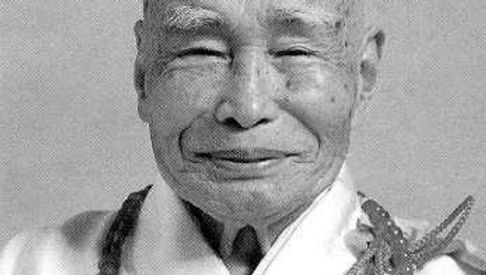
Nichidatsu Fujii was born on August 6, 1985 into a peasant family in the wilderness of the Aso caldera, Japan. At the age of 19, he was ordained a monk into an ascetic order. At the age of 28, he had a dream that his destiny was to spread the teachings of Nichiren, and save the world. Relying on a prophesy in the Lotus Sutra, which says that in the Latter Day of the Law, Buddhism would spread from East to West, he decided to go west. Unfortunately, the Imperial Government managed to convince him that west was Manchuria and China. Accordingly he collected a group of like-minded disciples and they formed the Nippon-zan Myohoji Dai-sanga (Japan-Mountain Wonderful Dharma-Temple Great Sangha) [3] which was co-opted and funded by the government, and the monks were given military titles.
Very innocently, Nichidatsu kept sending his dispatches to the government, providing it with valuable intelligence information of Chinese troop movements and other logistics.
This arrangement came to an abrupt end, when the disastrous earthquake of 1923 struck Japan, and Nichidatsu, like Nichiren was convinced that this was due to the sins of the Japanese government. The government of course stopped his funding and cut him loose, when it probably dawned on Nichidatsu that “west” was really India, the land of the Buddha.
Nichidatsu arrived in Calcutta in 1931, and in 1933 he met Mahatma Gandhi at his ashram in Wardha. The first meeting last only about 15 minutes but “...Nichidatsu was so overcome with emotion at being in the presence of Gandhi that he could only stand with his hands pressed reverently together while tears of joy poured down his face…..It is thanks to Gandhi that Nichidatsu became completely dedicated to the cause of non-violence....”.[4] Gandhi asked him to remain at the ashram and gave him the name ‘Fuji Guruji’.
When one day Gandhi picked up picked up Guruji’s drum and began chanting, Nichidatsu could not contain himself. He writes in his memoirs, “When Gandhiji beat the Dharma-drum of Namu Myo Ho Ren Ge Kyo...the independence of India was assured in the near future….We were drawn into the laughter of Gandhiji and laughed rejoicingly together. It was like a dream.” [5]
Beginning in the Cold War period, Nichidatsu preached non-involvement and did hunger strikes for peace. He also began the movement to build peace pagodas around the world.
The first Peace Pagodas were built as a symbol of peace in the Japanese cities of Hiroshima and Nagasaki where the atomic bombs took the lives of over 150,000 people, almost all of whom were civilian, at the end of World War II.
Fujii returned to India and built a World Peace Pagoda in Rajgir, in 1965. The first Gohonzon [6] in India was probably enshrined in this pagoda.
By 2000, at least 80 Peace Pagodas had been built around the world in Europe, Asia, and the United States, though not all are due to his movement.
While the Pagodas have been one expression of their call for peace, Nipponzan-Myōhōji also has carried its prayers to the world in numerous walks. Since 1976, when a group joined the Continental Walk for Disarmament and Social Justice across the United States, their presence has been an important part of many movements for peace and justice.
"We must go out among the people." Fujii taught. "In the Sutra there is a line that states, 'So this man, practicing in the world, shall disperse the gloom of living.' Religion, which does not 'go' will not be able to provide the relief which must be brought about…..Religion becomes isolated from the happenings of the world because it tends to be occupied in seeking solutions to one's own spiritual matters. If we fail to prevent a nuclear holocaust, one's desire for security is nothing but a dream. All must be awakened."
Almost 30 years later, in the footsteps of Nichidatsu followed Surai Sasai. Bhadant Nagarjun Arya Surai Sasai, popularly known as Sasai, is a Japanese-born Buddhist monk who later chose India as his home.
Sasai came to India in 1966 and met Nichidatsu Fujii, whom he helped with the Peace Pagoda at Rajgir. He fell out with Fuji, however, but he related that on his return journey he was stopped by a dream in which a figure resembling Nagarjuna appeared and said, "Go to Nagpur". In Nagpur, he met Wamanrao Godbole, the person who had organized the conversion ceremony for Dr. Ambedkar in 1956.
Sasai claims that when he saw a photograph of Dr. Ambedkar at Godbole's home, he realized that Ambedkar had appeared in his dream. At first, Nagpur residents considered Surai Sasai very strange. Then he began to greet them with "Jai Bhim" (victory to Ambedkar) and to build viharas. In 1987, a court case to deport him for overstaying his visa was dismissed. He was granted Indian citizenship. Sasai is one of the main leaders of the campaign to free the Mahabodhi Temple at Bodh Gaya from Hindu control. [7]
“Surai Sasai has skillfully drawn on Dr Ambedkar’s belief that Buddhist monks should be social activists and engage in conversion so that Buddhism might once again take roots in India. He constantly harangues people to “Go into the villages. Convert!” But the Nichiren Buddhist influence is clear, given Nichiren’s advocation of an aggressive form of proselytism…” [8]
Many years ago, I was travelling on the outskirts of Nagpur, visiting various historical and archeological sites. We stopped by a little house, at the foot of a hill, on top of which was supposed to be a temple that contained the remnants of Nagarjuna’s alchemical laboratory. The caretaker of the Buddha vihara across the road and his family lived in this house. We were invited in for a cup of tea, and over tea I learnt that the man is called “Angulimala” by the locals. Before he converted to Buddhism, he was a “bill collector” or contract killer, actually a hit man. Like the Angulimala of legend he had “stopped” in his tracks when he encountered Buddhism. In one corner of the humble abode was a shrine and on the wall, a Nichiren Gohonzon. It was given to him by Surai Sasai. His daughter was keen to do some chanting with me. So we sat down cross legged in front of the shrine and chanted “Nam Myoho Renge Kyo” for about five minutes.
Shakubuku had worked.
[1] In India, Bharat Soka Gakkai (BSG)
[2] “Bundle of Energy”, The Tribune, May 23, 2017, http://www.tribuneindia.com/news/life-style/bundle-of-energy/411054.html
[3] From “Fire in the Lotus”, The Dynamic Buddhism of Nichiren, Daniel B. Montgomery
[4] Ibid. Pg. 256
[5] Nichidatsu Fujii, Buddhism for World Peace
[6] Gohonzon, the object of worship in Nichiren Buddhism, a calligraphic mandala inscribed by Nichiren.
[7] The law governing the administration of the Mahabodhi Temple ensures that the committee in charge of the Temple will always have a Hindu majority.
[8] Chapter 10, “Liberate the Mahabodhi Temple”, Tara Doyle, from “Buddhism in the Modern World: Adaptations of an Ancient Tradition”, Steven Heine, Charles S. Prebish, Editors.
Note: This article was published on the Buddhist Door Global website on August 18, 2017. https://www.buddhistdoor.net/features/shakubuku-the-advent-of-nichiren-buddhism-in-india/